To remove coffee smell from car interiors, blot up the spill immediately and apply a mixture of white vinegar and water or an enzymatic cleaner to break down organic particles. For deep-seated odors, leave an open container of baking soda or activated charcoal in the vehicle overnight to absorb the lingering scent; ensure the upholstery is completely dry to prevent mold growth.
You grabbed your morning coffee, hit the I-5 on-ramp, and then it happened. Now your car smells like a burnt espresso machine every time the sun heats up the interior, and that stain on your seat is not getting any lighter on its own. Coffee spills are deceptively destructive because the oils, tannins, and sugars work fast, bonding to fabric fibers and carpet backing within minutes. In this guide, you will learn exactly how to treat a fresh spill in the first 60 seconds, how to remove coffee stains from every surface type in your car, and how to eliminate that sour smell for good, whether the spill happened this morning or two weeks ago.
TL;DR: Quick Answers for a Coffee Emergency
Will coffee smell go away in the car? Yes, if you treat it correctly. Coffee odor that lingers usually means the spill soaked into seat foam or carpet backing and was never fully extracted. Here is what you need to know right now:
Blot immediately, never rub. Rubbing drives coffee deeper into fabric fibers.
Baking soda and enzyme cleaners are the most effective odor neutralizers because they break down the organic compounds causing the smell rather than masking them.
Old, dried stains are not hopeless. They require re-hydrating the stain and a few treatment rounds, but they do come out.
Dairy makes it worse. If your coffee had cream or milk, the odor will be more stubborn and persistent, especially in a hot San Diego car interior.
Why Coffee Spills Smell So Bad and Stain So Fast
Coffee is more chemically aggressive than most people realize, which is why a single spill can turn into a lasting problem.
The main culprit is tannins, the same natural compounds that stain teeth and darken wood. Tannins bond directly to fabric fibers on contact, and the longer they sit, the more they oxidize and lock in. A spill you blot up in two minutes behaves very differently from one that dries for an hour in a hot car.
The second problem is oils. Coffee contains its own natural oils, and if your drink had cream, milk, or a dairy-based creamer, those fats penetrate deep into upholstery fibers and carpet backing. That is what creates the sour, musty smell that lingers long after the visible stain seems clean. Dairy begins to break down quickly in a warm interior, and a car parked in Chula Vista sun can reach 130 to 150 degrees inside, accelerating that process significantly.
What neutralizes coffee smell? Not air fresheners. The only solutions that actually work are enzyme cleaners and baking soda, both of which break down the organic compounds at a molecular level rather than covering them up. That distinction matters a lot when you are trying to fully remove coffee smell from your car rather than just masking it temporarily.
Act in the First 60 Seconds: What to Do Immediately After Spilling
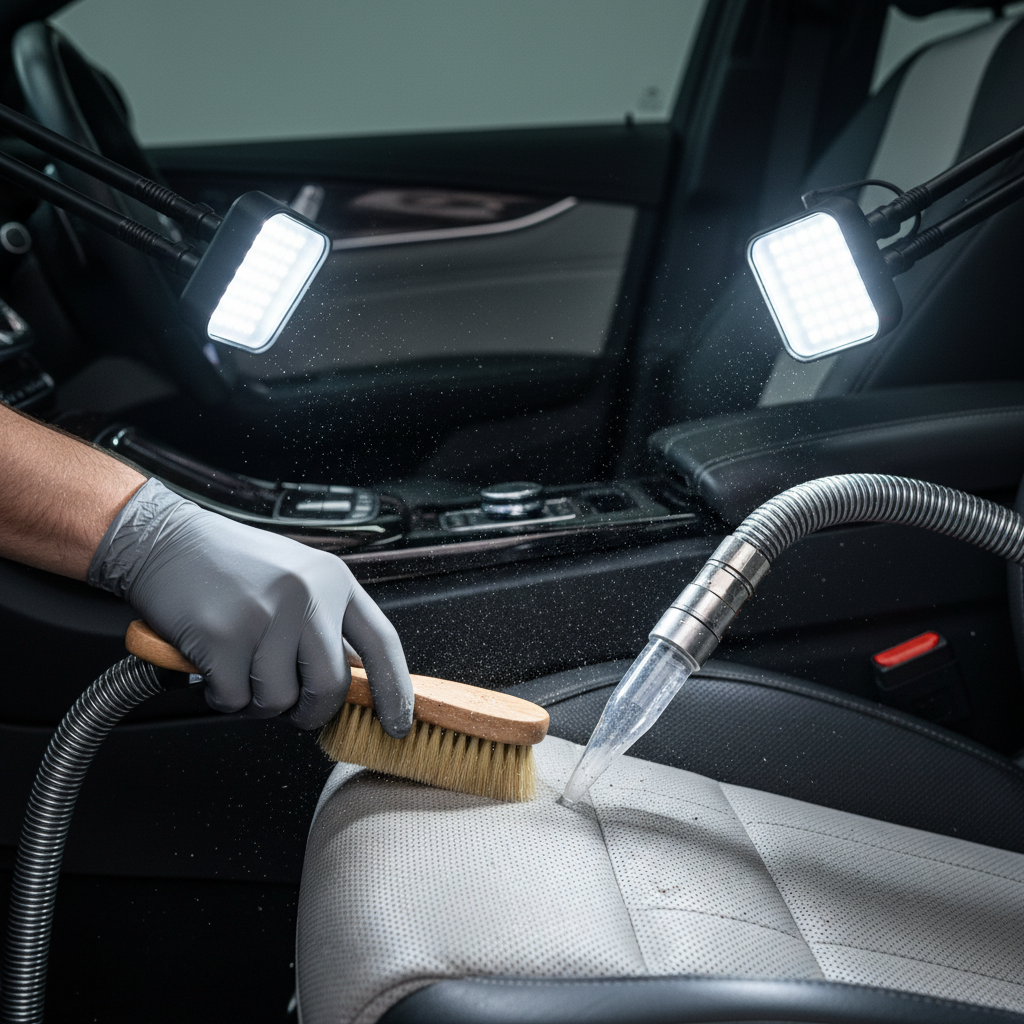
Knowing the chemistry is useful, but right now you need a action plan. The first 60 seconds after a spill are worth more than any cleaning product you can buy later.
Step 1: Blot immediately, never rub. Grab a microfiber cloth or paper towels and press firmly into the spill to lift as much liquid as possible. Rubbing does the opposite of what you want; it drives the tannins deeper into fabric fibers and spreads the stain outward.
Step 2: Dilute with cool water. Add a small amount of cool water to the affected area. Not warm, not hot. Hot water accelerates the tannin-bonding process and essentially sets the stain the same way heat does.
Step 3: Blot inward from the edges. Start at the outer edge of the spill and work toward the center. Most people blot from the middle outward and unknowingly expand the stain by several inches. This one technique makes a genuine difference in the final result.
Step 4: If you have nothing on hand, use whatever dry, clean cloth is available to absorb as much as possible and treat it properly as soon as you can.
The San Diego context matters here. A car parked in Chula Vista can reach interior temperatures well above 130 degrees, and that heat acts like a dryer on your upholstery. The faster you absorb and cool the spill, the less the tannins and dairy compounds have a chance to oxidize and lock in permanently.
How to Remove Coffee Stains by Interior Surface Type
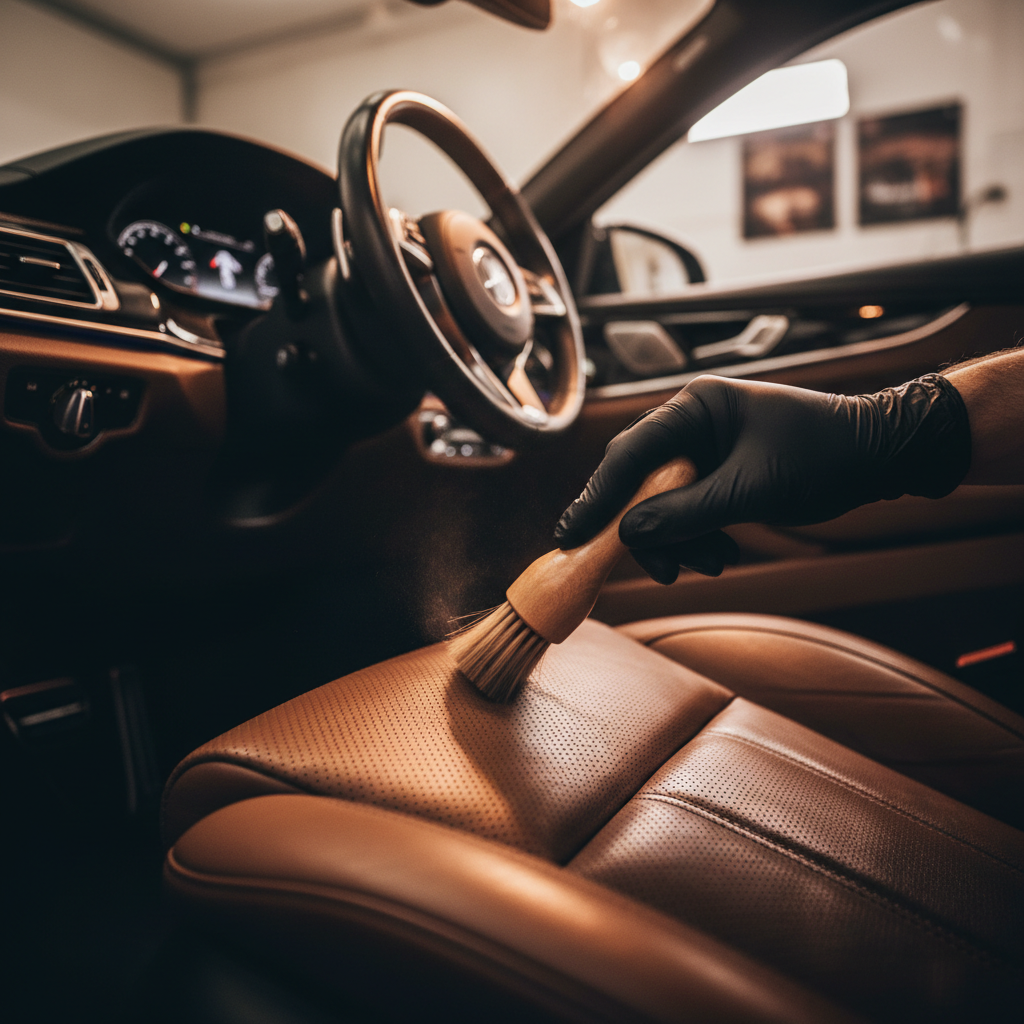
Now that you have absorbed as much of the spill as possible, the next step depends entirely on what surface you are dealing with. Coffee does not behave the same way on leather as it does on carpet, and using the wrong method can make things significantly worse.
Fabric and Cloth Seats
Mix 1 part white vinegar, 2 parts cool water, and a few drops of dish soap. Apply the solution to the stained area, let it sit for 5 minutes, then blot firmly with a clean microfiber cloth. Repeat until the stain lifts. For a dried stain that has already set, make a baking soda paste using 3 parts baking soda to 1 part water, spread it over the stain, and let it sit for 20 to 30 minutes. Scrub gently with a soft-bristle brush, then vacuum the residue clean.
Carpet and Floor Mats
Use the same vinegar and dish soap solution, but here a wet/dry vacuum makes a significant difference. Applying solution and blotting lifts surface stains; extraction pulls coffee compounds out of the carpet backing where odor actually lives. Chula Vista commuters tend to spill most often near the cupholder area on the driver-side floor mat, and those spots benefit the most from proper extraction rather than surface cleaning alone.
Standard Leather and Vinyl
Blot immediately and do not let liquid sit. Use a pH-balanced leather cleaner or a very mild dish soap solution applied sparingly with a damp cloth. Never saturate leather. Once the area is clean and dry, apply a leather conditioner to restore what the cleaning process removed.
Perforated Leather Seats
This surface requires extra caution. Coffee seeps through the perforations and can dry inside the foam padding underneath, creating a smell that resists surface cleaning entirely. Blot gently and avoid pressing hard, which forces liquid deeper. Apply an enzyme cleaner with a lightly dampened cloth rather than spraying directly onto the seat, which risks over-saturation.
Center Console and Hard Plastics
Interior detailing wipes or a damp microfiber cloth with a small amount of mild soap handle these surfaces well. Wipe thoroughly and follow with a dry cloth.
Headliner
Treat the headliner with more care than any other surface. Excess moisture loosens the adhesive backing and causes sagging that cannot be undone easily. Dab only with a lightly dampened cloth using minimal pressure, and allow the area to fully air dry before touching it again.
How to Get Coffee Smell Out of Your Car Carpet and Seats
Cleaning the visible stain and removing the smell are two separate problems, and confusing them is the most common reason people end up still catching a sour whiff weeks later. You can scrub a coffee stain until it disappears completely and still have odor locked in the carpet backing or seat foam underneath. That is where the organic compounds actually live, and surface cleaning alone rarely reaches them.
Before you do anything for odor removal, the area needs to be completely dry. A damp surface traps odor molecules and slows down any treatment you apply. Park in a well-ventilated outdoor spot, not a closed garage where heat builds up, and leave the windows down until the cleaned area has fully dried to the touch. In San Diego, the dry air and sun work in your favor here as long as you are not leaving the car sealed up.
Step 1: Dry the area completely before treating for smell.
If you cleaned the stain and the surface still feels cool or slightly damp, give it more time. Running the car with the AC on and windows cracked for 20 to 30 minutes can accelerate the drying process without baking residual compounds deeper into the fabric.
Step 2: Apply baking soda and let it work overnight.
Once the area is fully dry, sprinkle a generous layer of baking soda directly over the affected carpet or seat fabric. Do not be shy with the amount. Baking soda works by absorbing and neutralizing acidic odor compounds, and a thin dusting will not do much. Leave it overnight, then vacuum it thoroughly the next morning. This step alone resolves mild coffee odor in most cases, particularly when the spill was black coffee without dairy.
Step 3: Use an enzyme cleaner for anything involving cream or milk.
If your coffee had cream, milk, or a creamer of any kind, baking soda alone is often not enough. Dairy compounds break down into fatty acids that embed themselves deep in fabric fibers, and those require an enzyme-based cleaner to fully eliminate. Products like Nature's Miracle are formulated specifically for this. Enzyme cleaners work by breaking down the actual organic molecules causing the odor rather than covering them with fragrance. Apply according to the product instructions, allow adequate dwell time, and blot rather than scrub. For car carpet, a wet/dry vacuum after the dwell time dramatically improves results by pulling the broken-down compounds out of the backing instead of leaving them to re-settle.
This is the step most people skip, and it explains why the smell seems to fade and then return after a warm day in the Chula Vista sun heats up the interior again.
Step 4: Air out the car and absorb any residual odor.
After treating, leave the windows down and allow the car to air out for several hours. If any faint smell remains, place a small open bowl of baking soda on the floor of the car overnight. It continues to absorb residual odor molecules in the air even after you have treated the surface directly.
How to deodorize a car with coffee? This is one of those questions where the answer is genuinely counterintuitive. Fresh, dry coffee grounds placed in a small open container and left in the car overnight can actually absorb odors from the air much the same way baking soda does. The grounds act as a natural odor absorber. Just make sure they are dry and contained so you are not adding to your problem.
For stubborn cases where the coffee soaked deep into seat foam or carpet backing, no amount of surface treatment will fully remove the smell. That is the point where extraction equipment makes the difference, and we will cover exactly when to make that call in the next section.
Old Coffee Stains That Have Already Dried: Is It Too Late?
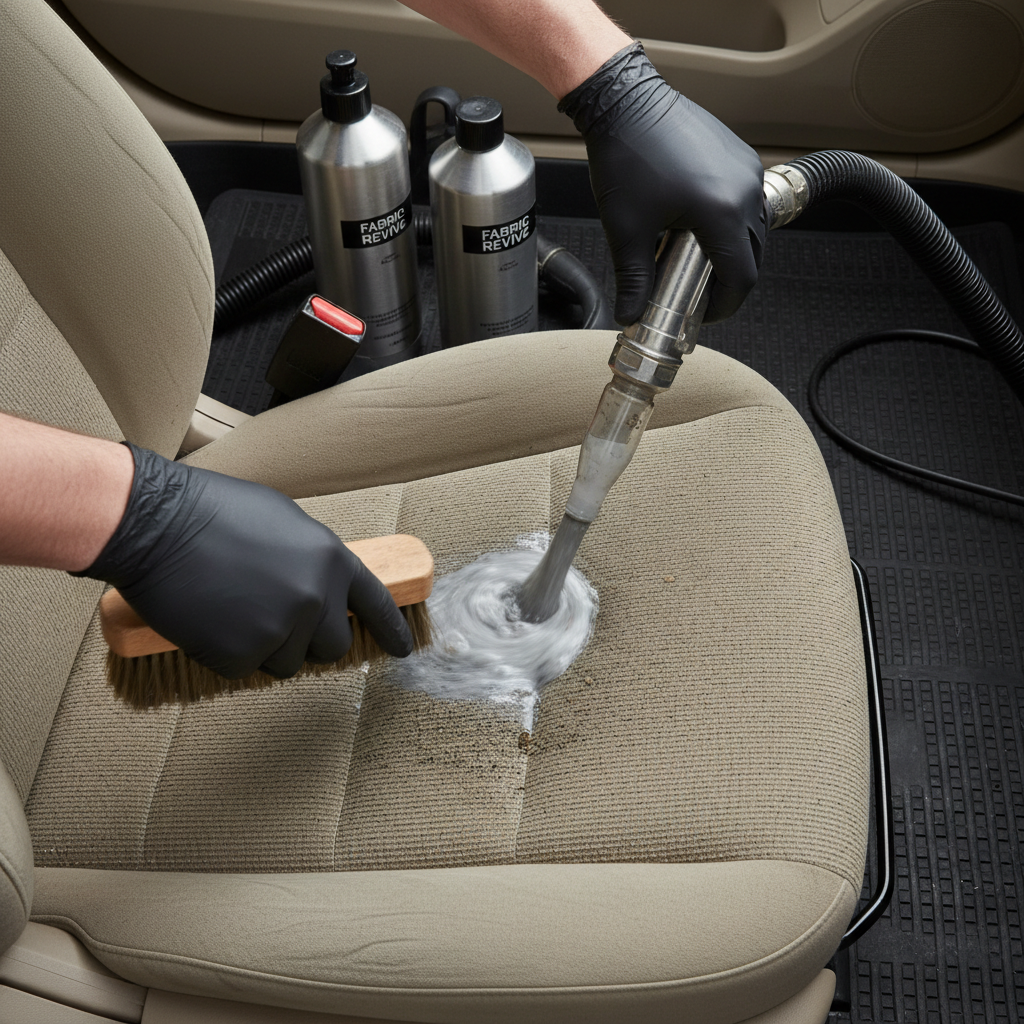
It is not too late. Dried coffee stains are more stubborn than fresh ones, but the same tannins and oils that bonded to your fabric can be loosened with the right approach. Expecting results in a single pass is where most people give up too early; two or three treatment rounds are completely normal for a set-in stain.
Step 1: Re-hydrate the stain before applying anything.
This step is non-negotiable. Dry tannins have oxidized and bonded tightly to fabric fibers. Applying a cleaning solution directly to a dry stain limits its penetration significantly. Dampen the area with cool water first and let it soak in for a minute or two. You are essentially reversing some of the drying process before the real treatment begins.
Step 2: Apply an enzyme cleaner and let it dwell.
Once the stain is re-hydrated, apply a dedicated enzyme cleaner and give it 10 to 15 minutes of dwell time. Enzyme cleaners break down the organic compounds in the coffee and any dairy residue rather than simply lifting surface discoloration. This is especially important if the stain has been through multiple heat cycles parked in the sun.
Step 3: Scrub gently and blot.
Use a soft-bristle brush in slow circular motions. Then blot firmly with a clean microfiber cloth. Repeat the enzyme application and scrub cycle as needed until the stain lifts.
Two common questions worth addressing directly: WD-40 can loosen some stains, but it leaves an oily residue on fabric that creates a new problem. Skip it for car interiors. Dawn dish soap, on the other hand, is a solid option because it cuts through coffee oils effectively. Use it sparingly, work it in gently, and rinse thoroughly so no soapy residue remains to attract more dirt.
When DIY Is Not Enough: Signs You Need a Professional Detail
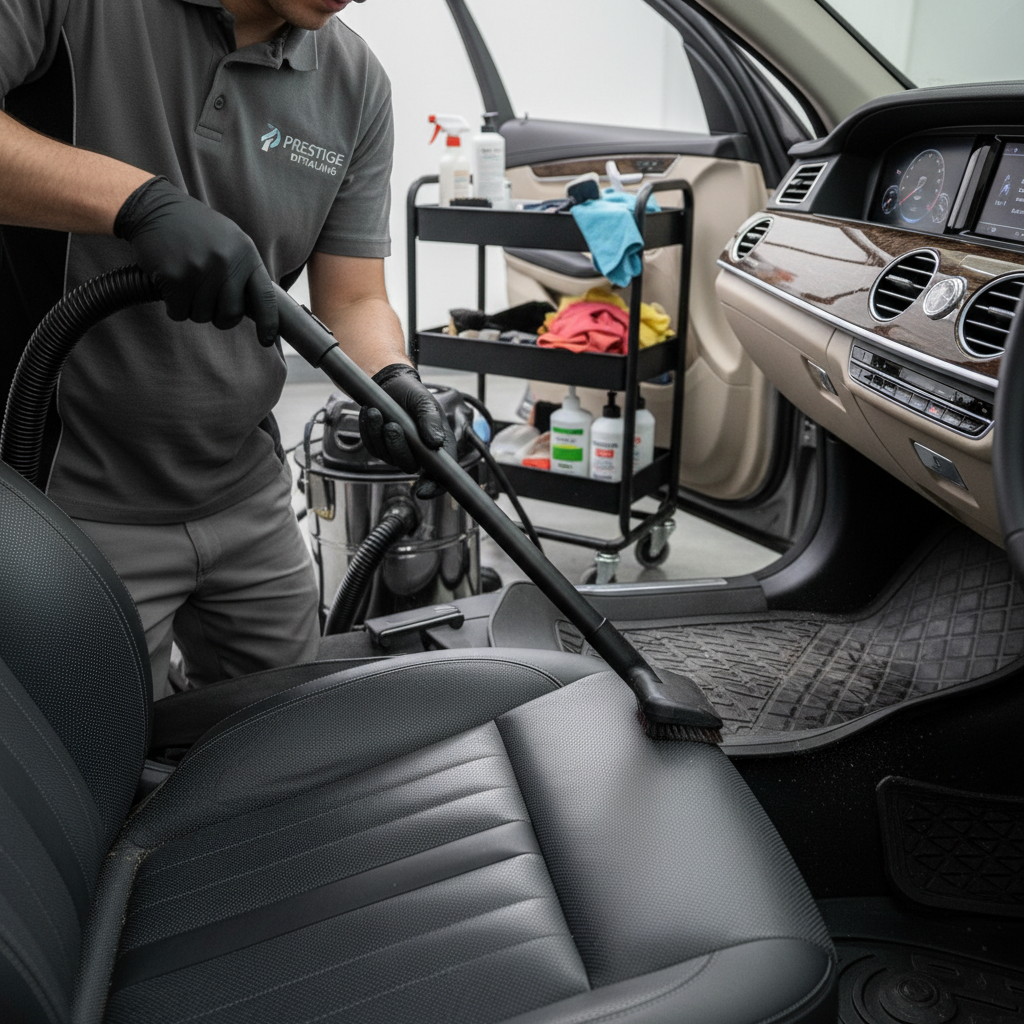
Some coffee spills genuinely exceed what DIY methods can resolve, and recognizing that point early saves you from repeated frustration and potential upholstery damage.
Professional help makes sense in four situations:
The smell persists after two or more treatment rounds. If you have applied enzyme cleaner, used baking soda overnight, and the sour odor returns after a warm day in the car, the compounds have soaked into the seat foam or carpet backing beneath the surface layer. No amount of blotting or topical treatment reaches that depth.
The stain has been through multiple heat cycles. A spill that has baked in a Chula Vista parking lot several times has gone through repeated tannin-bonding cycles. Re-hydrating and enzyme treatment help, but the oxidation compounds in heat-cycled stains often require professional extraction to fully lift.
You have perforated leather, Nubuck, or Alcantara. These surfaces punish DIY mistakes quickly and often permanently. The risk of over-saturation or fiber damage is too high.
The entire travel mug went in. Volume matters. A large spill saturates padding in ways that surface cleaning cannot address.
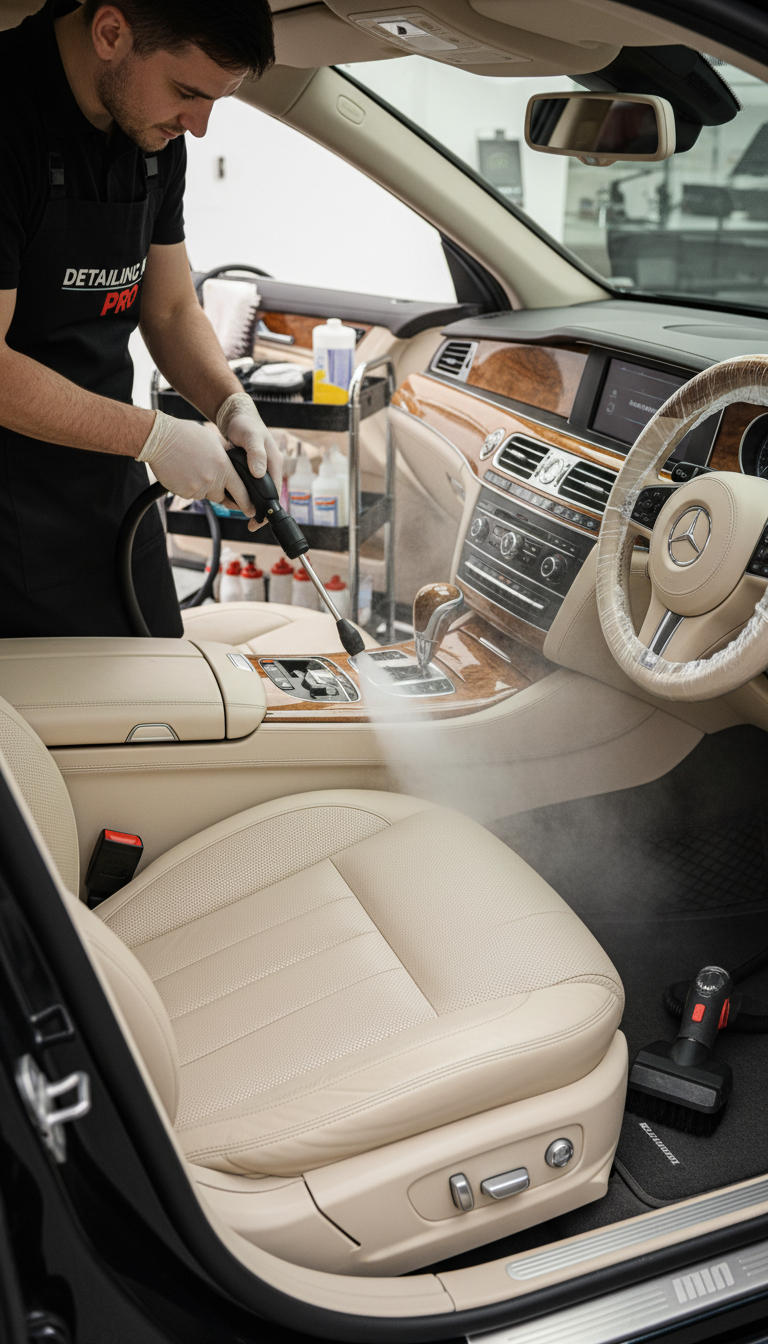
Magic Mike Car Wash serves San Diego, Chula Vista, La Mesa, El Cajon, and National City and comes directly to your home or office. Our interior deep cleaning service uses hot water extraction equipment that pulls coffee compounds, dairy residue, and odor molecules out of carpet backing and seat foam. That mechanical extraction is something no consumer-grade product can replicate.
Prevention Tips for San Diego Commuters Who Love Their Coffee
The best way to remove coffee smell from your car is to never need to. Stop-and-go traffic on the 805 and 94 is the real culprit here; a sudden brake at the Chula Vista interchange with a standard cafe cup in your hand is a spill waiting to happen.
Switch to a proper spill-proof travel mug. A cafe cup with a flimsy plastic lid is not engineered for sudden stops. A quality insulated tumbler with a sealed lid is.
Check the cupholder fit. Many modern cars have cupholders sized for standard bottles, not tall tumblers. If your mug wobbles, it will fall. A simple cupholder adapter solves this for a few dollars.
Keep microfiber cloths in your glove box. A small pack of detailing wipes takes up almost no space and turns a fresh spill into a minor inconvenience instead of a set-in stain.
Apply a fabric protector after your next interior detail. If you have cloth seats or carpet, a waterproofing spray creates a barrier that slows absorption and gives you extra time to blot before the tannins bond.
Book a Mobile Interior Detail in San Diego and Let Us Handle It
Even with the right technique and the best products, some spills simply need more than a microfiber cloth and an overnight baking soda treatment. If the coffee soaked deep into your seat foam or carpet backing, or if the smell keeps coming back after a warm afternoon in the parking lot, professional extraction is the practical next step, not a last resort.
Magic Mike Car Wash comes to you in San Diego, Chula Vista, La Mesa, El Cajon, and National City. Our interior deep cleaning service uses hot water extraction equipment that pulls odor compounds and residue out of carpet backing and seat padding. You do not drive to us. We show up at your home or office ready to work.
If you need to remove coffee smell from your car without the back-and-forth, mobile detailing in San Diego is the most straightforward solution. Reach out to book, and we will take it from there.
Dealing with coffee spills quickly is the best way to prevent permanent stains and lingering odors. Whether you are cleaning leather, upholstery, or carpets, using the right technique ensures your vehicle stays in great condition. If you find yourself facing a particularly stubborn mess or simply want to restore your cabin to its original glory, professional assistance can make a world of difference. For those times when you prefer a deep clean handled by experts, our Interior Detailing services provide a thorough solution that saves you time and effort.